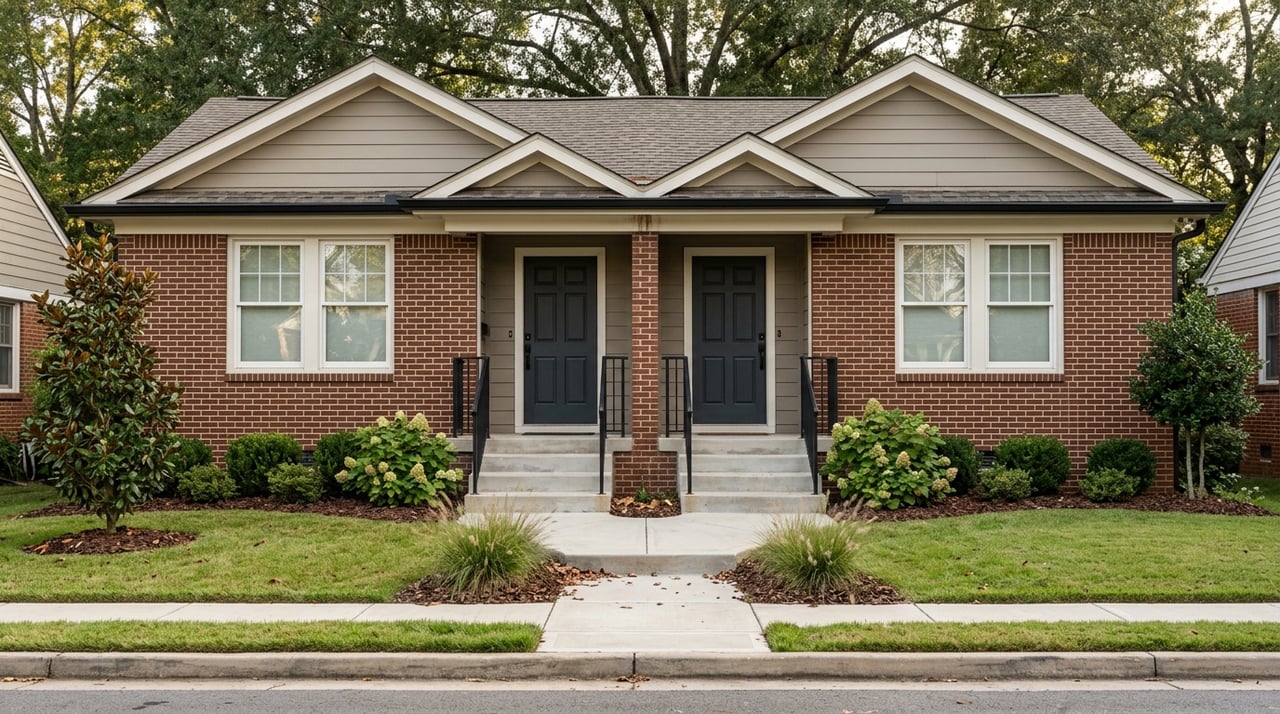
Looking at duplexes in Statesville and wondering whether the numbers can really work? You are not alone. Small investors are often drawn to duplexes because they can offer two income streams on one property, but in a market like Statesville, success depends on more than just finding a low purchase price. This guide will help you understand why Statesville gets investor attention, what to verify before you buy, and where disciplined due diligence matters most. Let’s dive in.
Why Statesville draws duplex investors
Statesville stands out as a practical small multifamily market for a few simple reasons. The city reached 31,693 residents in 2024, which is up 11.3% from the 2020 Census base. Iredell County also continued to grow, reaching 206,361 in 2024 and an estimated 211,798 in 2025.
That population growth matters because duplex investing works best when you have a broad base of renters and future buyers. In Statesville, you also have location working in your favor. The city sits at the crossroads of Interstate 77 and Interstate 40, about 40 miles north of Charlotte and 45 miles southwest of Winston-Salem.
For investors, that means Statesville is part of a commuter-oriented corridor rather than a purely local market. The city also benefits from a diversified employment base that includes advanced manufacturing, information technology, healthcare and life sciences, financial services, logistics and warehousing, and agriculture. A mix like that can help support steadier rental demand over time.
Why duplex demand can be steady
Statesville is more rental-oriented than many investors may expect. The owner-occupied housing unit rate in the city is 51.6%, compared with 71.9% in Iredell County overall. That difference suggests the city proper has a stronger renter presence than the county as a whole.
The local cost gap between renting and owning also helps explain why duplex demand may remain steady. Statesville’s median gross rent is $1,000, while median monthly owner costs with a mortgage are $1,473. In Iredell County, median gross rent is $1,252 and median owner costs with a mortgage are $1,714.
For many households, that gap supports demand for workforce rentals and smaller multifamily options. Commute patterns reinforce that picture too. Mean travel time to work is 20.1 minutes in Statesville and 25.1 minutes across Iredell County, which fits the area’s role as a connected regional market.
What duplex investors should expect
If you are searching for duplexes in Statesville, it helps to set the right expectations from the start. This is not a market where every opportunity will be newer construction or fully updated product. The city’s median value of owner-occupied housing units is $248,000, compared with $321,400 in Iredell County.
Combined with the city’s emphasis on historic homes in the downtown area, that points many investors toward value-add opportunities. In plain terms, many duplex deals in Statesville are likely to be older properties where returns depend on smart renovation planning, realistic maintenance budgets, and careful underwriting.
That is why purchase price alone should never drive your decision. In a moderate-rent market, repair surprises can have an outsized effect on returns. A deal that looks attractive on day one can become much less appealing if the roof, plumbing, or electrical systems need more work than expected.
Cap rates need context
A common mistake with duplex investing is comparing a small two-unit property to large apartment assets without adjusting expectations. Broader multifamily reports help give context, even though they are not Statesville-specific duplex pricing tools. CBRE reported an average core multifamily going-in cap rate of 4.75% in the second quarter of 2025, while Northmarq placed Charlotte multifamily cap rates around 5.0% in 2025 and Lee & Associates reported a 5.4% Charlotte multifamily cap rate in the fourth quarter of 2025.
For a Statesville duplex, a practical underwriting approach is to seek a yield premium above stabilized Charlotte multifamily. That is not a published local quote. It is an underwriting inference based on the fact that duplexes are smaller, often more management-intensive, and less liquid than larger apartment properties.
The takeaway is simple. If the projected return looks too close to a larger, more stable multifamily asset nearby, you may not be getting paid enough for the extra risk and hands-on management.
Zoning matters before you offer
One of the biggest advantages in Statesville is that the city’s Unified Development Code clearly contemplates duplexes in several residential districts. That gives investors a concrete starting point, but it does not remove the need to verify details on each parcel.
According to the code, duplex standards vary by zoning district:
- In R-8M and R-8MF, duplex development requires a minimum lot size of 12,000 square feet and a minimum lot width of 80 feet.
- In R-5M, duplexes require at least 7,500 square feet and 60 feet of lot width.
- In R-5MF, duplexes require at least 7,500 square feet and 70 feet of lot width.
This is one of the first items you should confirm before moving forward. Even if a property looks like a duplex opportunity on paper, the lot still needs to fit the city’s district standards.
Parking and site plans are not small details
In Statesville, zoning clearance is required for projects that need a building permit, septic approval, or sign clearance. The city’s permit guidance also calls for a site plan and two 9-by-18-foot parking spaces per dwelling.
That means parking layout is not just a design issue. It can directly affect whether a duplex use or improvement plan fits the site. If you are buying an existing duplex, you should still confirm that the lot layout, parking, and current use align with city requirements.
This is especially important when looking at older or value-add properties. A lot that seems workable at first glance may become more complicated once you measure frontage, parking placement, setbacks, and overall site configuration.
Know which jurisdiction controls the property
Investors should also confirm whether a property falls under Statesville zoning or county zoning. Iredell County notes that Statesville, Troutman, Mooresville, and Harmony each have their own zoning jurisdictions, while the remainder of the county is governed by county zoning.
If the duplex is inside Statesville, the city permit path comes first, followed by county building standards. That distinction matters because you do not want to underwrite a deal based on the wrong approval process.
For buyers from outside the area, this is one of the easiest places to get tripped up. The mailing address alone does not always tell you everything you need to know. Verifying the exact jurisdiction early can save time and prevent expensive surprises.
Model taxes the right way
Property taxes are another area where investors need precision. In this market, your model should separate city and county millage rather than treating taxes as one simple line item.
Iredell County’s current tax rate is 50.00 cents per $100 of assessed value. Statesville’s city rate is 51.76 cents per $100, and the city also lists a 10-cent downtown rate. For properties inside city limits, the city and county notes indicate owners receive one combined bill with both county and city amounts.
That combined bill can make the payment process feel simpler, but your underwriting still needs to account for the separate layers. If a property falls within the downtown rate area, that should also be factored into your projections before closing.
Utilities can affect cash flow
Utility setup is another practical issue that can shape your duplex returns. Statesville Utility + Revenue Collections handles electric, water, and sewer accounts. The city also operates its own electric service and public utility functions.
For an investor, the key question is how those services are billed at the property level. Are the units separately metered, or will the owner be covering some or all utilities? That answer can materially affect net income.
Before you close, confirm utility billing structure and account setup. In a duplex, even modest monthly utility costs can reduce cash flow if they are not passed through or properly planned for in your operating budget.
A smart due diligence checklist
Statesville duplex investing rewards buyers who stay organized. A simple, disciplined process can help you avoid overpaying or missing issues that hurt returns.
Here is a practical due diligence sequence based on local requirements and market conditions:
- Confirm the parcel’s zoning district and whether duplex use is allowed.
- Verify lot size, frontage, and parking fit.
- Pull realistic rent comps.
- Confirm utility billing and whether meters are separate.
- Model taxes using the city and county rates.
- Estimate management and maintenance costs with local conditions in mind.
This process may sound basic, but it is where many deals are won or lost. In a value-add duplex market, the best investors are usually the ones who remain conservative and thorough.
What to inspect closely
Physical inspections deserve extra attention in Statesville because many duplex opportunities are likely to be older or lightly updated. You should treat the inspection period as a true underwriting phase, not just a box to check.
Pay close attention to these systems and conditions:
- Roof condition
- Exterior envelope
- HVAC systems
- Plumbing supply and drainage
- Electrical service
- Foundation and site drainage
- Life-safety and code issues between units
In a moderate-rent market, even a few unexpected repairs can reshape the entire investment thesis. A property does not need to be perfect, but you do need a clear picture of immediate repairs, near-term capital expenses, and ongoing maintenance risk.
Local execution matters
Owning a duplex is not just about buying well. It is also about operating well after closing. Statesville’s zoning and utility coordination steps make local follow-through important, especially if you do not live nearby.
That is why many small investors benefit from having a local point person for inspections, maintenance coordination, vendor access, and tenant-related issues. Fast response times can protect both your property condition and your long-term tenant retention.
For out-of-town buyers, this is often where working with a broker who understands local process, property types, and investor needs adds real value. The right guidance can help you spot friction points before they become costly problems.
The bottom line on Statesville duplexes
Statesville makes sense for investors who want a workforce-housing and value-add duplex market with regional access. Population growth, interstate connectivity, a diversified employment base, and lower entry values than the county overall all help explain why the market gets attention.
At the same time, this is not a plug-and-play market. Zoning, parking, tax layering, utility setup, and physical condition all deserve close review before you buy. If you approach Statesville duplexes with realistic numbers and disciplined due diligence, you can make smarter decisions and avoid the kind of surprises that hurt returns.
If you are weighing a duplex purchase in Statesville or want a second set of eyes on a specific property, Hernan Espiritu offers practical guidance for small investors who want clear numbers, local insight, and a smoother path from search to closing.
FAQs
What makes Statesville attractive for duplex investors?
- Statesville offers population growth, access to I-77 and I-40, a diversified employment base, and a more rental-oriented housing profile than Iredell County overall.
What should buyers verify about duplex zoning in Statesville?
- You should confirm the property’s zoning district, minimum lot size, required lot width, and whether the parcel can meet city standards for duplex use and parking.
Why are parking requirements important for Statesville duplex properties?
- Statesville’s permit guidance calls for a site plan and two 9-by-18-foot parking spaces per dwelling, so parking fit can affect whether a property works as expected.
How should investors estimate taxes on a Statesville duplex?
- Buyers should model both Iredell County and Statesville city tax rates separately, and also check whether a downtown rate applies to the property.
What property issues matter most when inspecting a Statesville duplex?
- Investors should closely inspect the roof, exterior, HVAC, plumbing, electrical service, foundation, drainage, and life-safety or code separation issues between units.
Are many Statesville duplex opportunities value-add properties?
- Yes. Based on the city’s housing values and local emphasis on historic homes, many duplex opportunities are likely to be older or lightly updated properties that require careful capital planning.